Azure Local

Beyond the Cloud: CapEx vs Subscription TCO Analysis - Part I

Beyond the Cloud: CapEx vs Subscription TCO Analysis - Part I

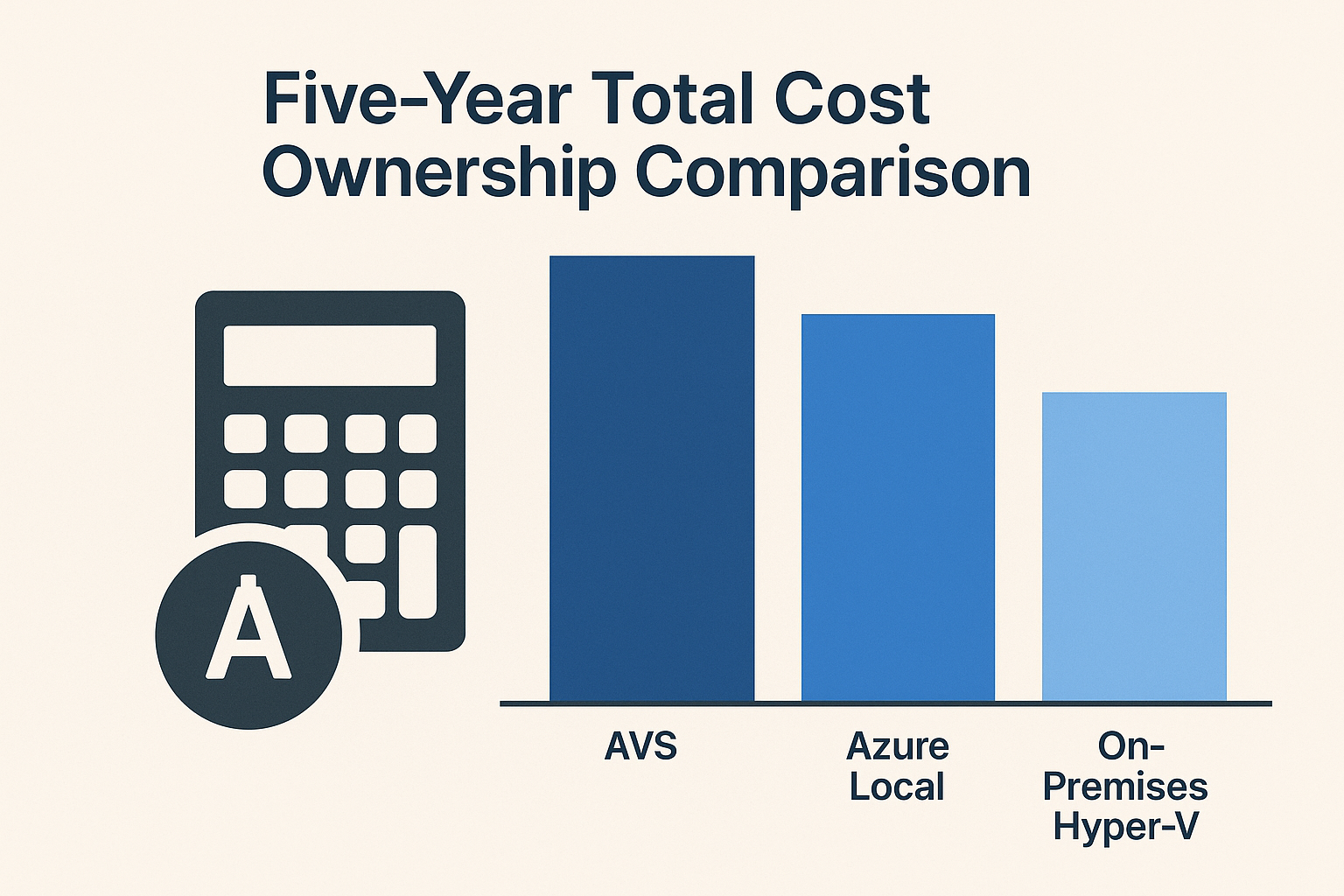
Which stack is cheapest over five years for a 100 VM footprint? A detailed TCO analysis of Hyper-V, Azure VMware Solution, and Azure Local.

Introduction

In our previous blog post, we explored why organizations are reconsidering their virtualization strategy post-VMware and highlighted the often-overlooked value of Windows Server Failover Clustering with Hyper-V. Now, in this first follow-up post of the "Beyond the Cloud: The Case for On-Premises Virtualization" series, we dive into the financial side of that decision. Specifically, we will compare the five-year Total Cost of Ownership (TCO) for three possible platforms to run a 100-Virtual Machine (VM) workload:

Beyond the Cloud: Rethinking Virtualization Post-VMware

Beyond the Cloud: Rethinking Virtualization Post-VMware

How Hyper-V with Windows Server Clustering Stays Relevant in an Azure-First World

From My Perspective as a Microsoft Azure Hybrid MVP – Two Decades in Microsoft Hybrid & HCI

I write this blog as a longtime Microsoft advocate with two decades of hands-on experience—from early Hyper-V in 2008 to today’s Azure Local. This series aims to highlight the potential of Windows Server Failover Clustering (WSFC) as a viable alternative for organizations transitioning away from VMware, especially in light of Broadcom’s acquisition. While I value Azure’s Cloud and Hybrid offerings, I believe Microsoft’s current messaging overlooks WSFC’s capabilities in providing cost-effective, high-availability solutions. Through this blog, I intend to shed light on WSFC’s strengths and advocate for its consideration in modern IT infrastructures.

Choosing A Windows Clustering Strategy in 2025

Choosing A Windows Clustering Strategy in 2025

Azure Local vs. Traditional SAN Clustering vs. Storage Spaces Direct

Introduction

In modern Windows infrastructure, there are multiple strategies for building highly available clusters. This content, originally published as a blog, was adapted into a presentation for a session at MMS MOA 2025, To Windows Server or Not: The Clustering Question, where the PowerPoint version is available. The session compares three key solutions side-by-side: Azure Local (Azure Stack HCI), Windows Server Failover Clustering with External Storage (traditional 3-tier architecture using SAN/NAS), and Windows Server Failover Clustering with Storage Spaces Direct (S2D). We explore the technical architecture of each, their pros and cons, and strategic considerations. Key factors like cost, scalability, performance, hardware needs, manageability, cloud integration, licensing, and best-fit use cases are analyzed with comparison tables for clarity. A dedicated section on demo scenarios is included to showcase strengths and differences in a lab environment. Finally, we provide a decision framework to guide choosing the right approach based on an organization’s needs.