Azure

Infrastructure as Code with Ansible and Terraform

Infrastructure as Code with Ansible and Terraform

Ansible, Terraform, and the IaC Decision for Hyper-V

Post 19 built an automation practice around PowerShell , modules, DSC v3, CI/CD pipelines. For many organizations, that’s enough. PowerShell is native, it’s free, it covers 100% of Hyper-V functionality, and your Windows team already knows it.

But some organizations have standardized on Ansible for configuration management across Linux and Windows. Others use Terraform for all infrastructure provisioning. And some want both , Terraform for creating resources, Ansible for configuring them. The question isn’t “which tool is best” , it’s “which tool fits your team, your existing investments, and your Hyper-V use case.”
PowerShell Automation Patterns (2026 Edition)

PowerShell Automation Patterns (2026 Edition)

DSC v3, Idempotent Modules, and CI/CD for Infrastructure

“PowerShell Returned to Its Throne” isn’t just a series tagline. It’s the architectural reality.

Every post in this series has used PowerShell for configuration, validation, and management. But there’s a difference between running scripts manually and building an automation practice. If you’re honest with yourself, most of us do the same thing: write a script, run it, tweak something, run it again, save it in a folder called “scripts-final-v3-FINAL,” and hope we remember the parameters next quarter.

S2D vs. Three-Tier and When Azure Local Makes Sense

S2D vs. Three-Tier and When Azure Local Makes Sense

The Honest Comparison , Performance, Cost, and When Each Approach Wins

This series advocates for on-premises Hyper-V with three-tier SAN architecture. But intellectual honesty , and the credibility of everything we’ve written , demands that we evaluate every option fairly. Storage Spaces Direct and Azure Local have legitimate use cases. Three-tier isn’t always the right answer.

The cost lens matters, though. For many organizations leaving VMware, the decision is not just about technical elegance. It is about whether Azure Local’s host fee and potential hardware refresh are justified, or whether reusing existing compute and existing SAN is the smarter move for the workloads they actually run.

Hybrid Without the Handcuffs

Hybrid Without the Handcuffs

Azure Arc, ASR, Defender, and the Services You Don't Need Azure Local For

“But what about all the cloud stuff Azure Local gets?”

It’s the first objection every decision-maker raises when you propose traditional Hyper-V over Azure Local. Azure Local comes with AKS, Azure Virtual Desktop, Azure Portal VM management, Azure Monitor, Azure Update Manager, Defender for Cloud , all integrated. How do you compete with that on standalone Hyper-V?

The answer: you don’t need Azure Local to get most of those services. Azure Arc brings much of the same Azure management plane to your existing Hyper-V infrastructure , selectively, incrementally, and without taking on the Azure Local platform fee just to reach the Azure control plane. You pick the services that add value. You skip the ones that don’t. You keep control over where the monthly bill starts.

Comparing AI: A fun test of AI capabilities

Comparing AI: A fun test of AI capabilities

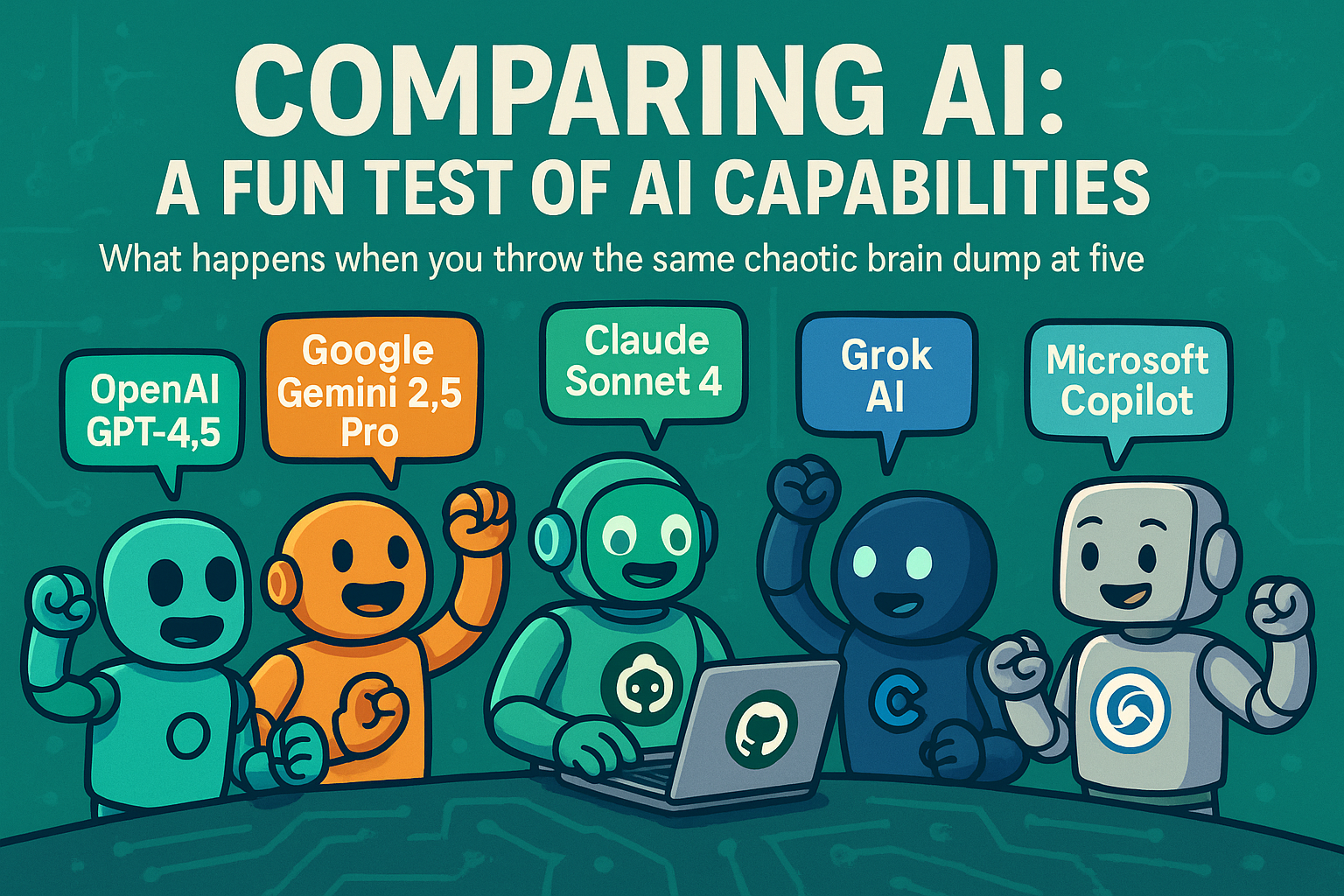
What happens when you throw the same chaotic brain dump at five different AI models? Join me for an entertaining battle royale between OpenAI GPT-4.5, Google Gemini 2.5 Pro, Claude Sonnet 4, Grok AI, and Microsoft Copilot as they attempt to decode my scattered thoughts about GitHub Copilot Chat configuration. It's like 'The Hunger Games' but for artificial intelligence!

Welcome to My AI Battle Royale! 🥊

Picture this: I’m sitting at my desk, drowning in my own scattered thoughts about GitHub Copilot Chat configurations, when I had what can only be described as a “brilliant” idea. Why not throw my messy brain dump at some of the world’s most advanced AI models and see who comes out on top?

So here we are – welcome to my completely unscientific, totally biased, but hopefully entertaining comparison of AI capabilities! Think of it as “The Hunger Games” but for artificial intelligence, and instead of fighting to the death, they’re fighting to make sense of my rambling requirements.

Beyond the Cloud: CapEx vs Subscription TCO Analysis - Part I

Beyond the Cloud: CapEx vs Subscription TCO Analysis - Part I

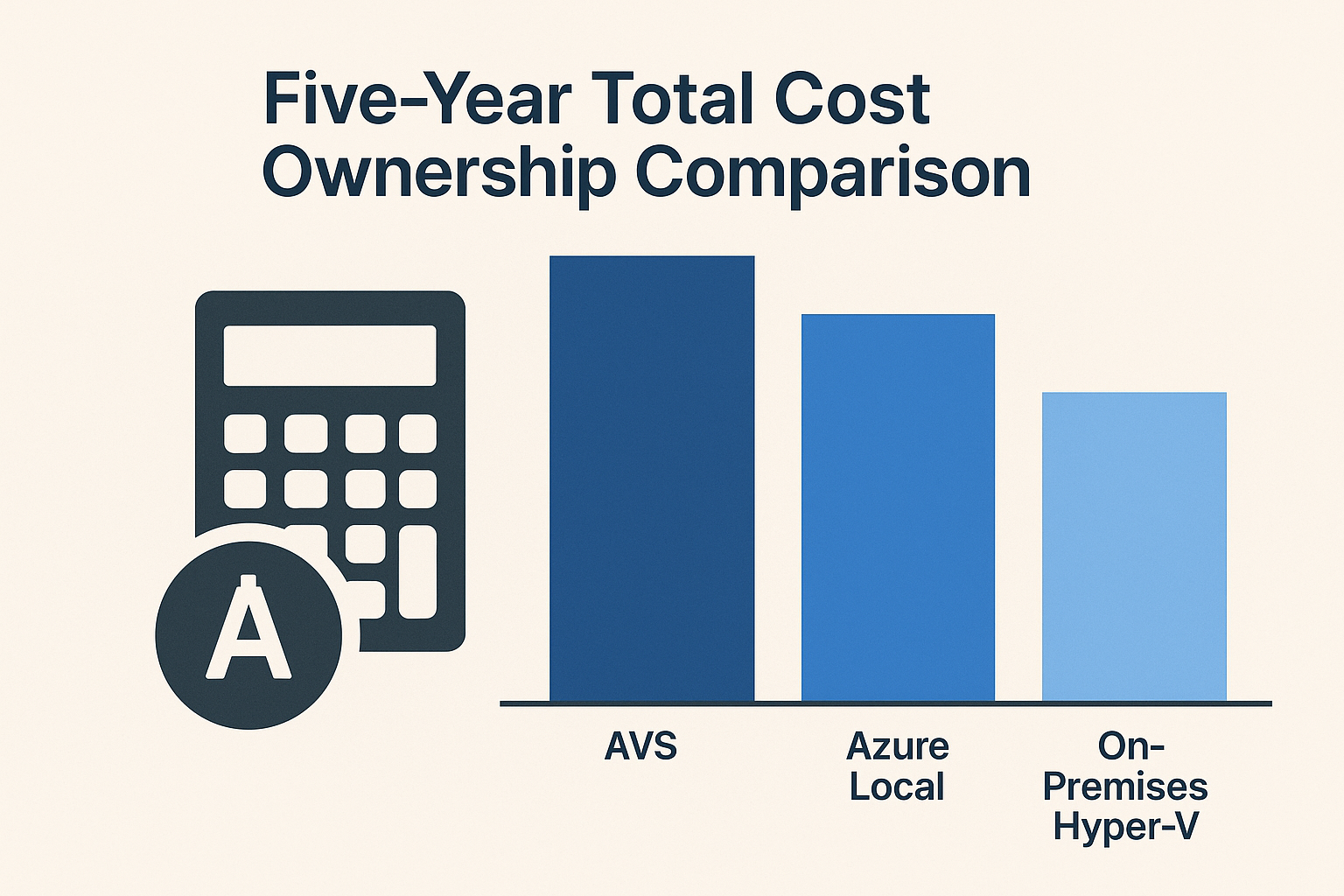
Which stack is cheapest over five years for a 100 VM footprint? A detailed TCO analysis of Hyper-V, Azure VMware Solution, and Azure Local.

Introduction

In our previous blog post, we explored why organizations are reconsidering their virtualization strategy post-VMware and highlighted the often-overlooked value of Windows Server Failover Clustering with Hyper-V. Now, in this first follow-up post of the "Beyond the Cloud: The Case for On-Premises Virtualization" series, we dive into the financial side of that decision. Specifically, we will compare the five-year Total Cost of Ownership (TCO) for three possible platforms to run a 100-Virtual Machine (VM) workload:

The 12 Days of Azure ArcMas - A Console In A Cloud Tree

The 12 Days of Azure ArcMas - A Console In A Cloud Tree

On the first day of Arc-mas, Azure granted me: A Console in a Cloud Tree. Where management's centralized for all to see

The 12 Days of Azure Arc-Mas: Day 1 - Centralized Management

On the first day of Azure Arc-Mas, Azure granted me: A Console in a Cloud Tree.

Single Control Plane Across Environments

Azure Arc is like the partridge in a pear tree at the heart of your environment’s management, extending the familiar Azure services to wherever your resources reside. It simplifies the complex, multi-faceted nature of modern IT landscapes by offering a unified management experience, enabling you to view and manage your resources irrespective of their physical or cloud location.