Migration

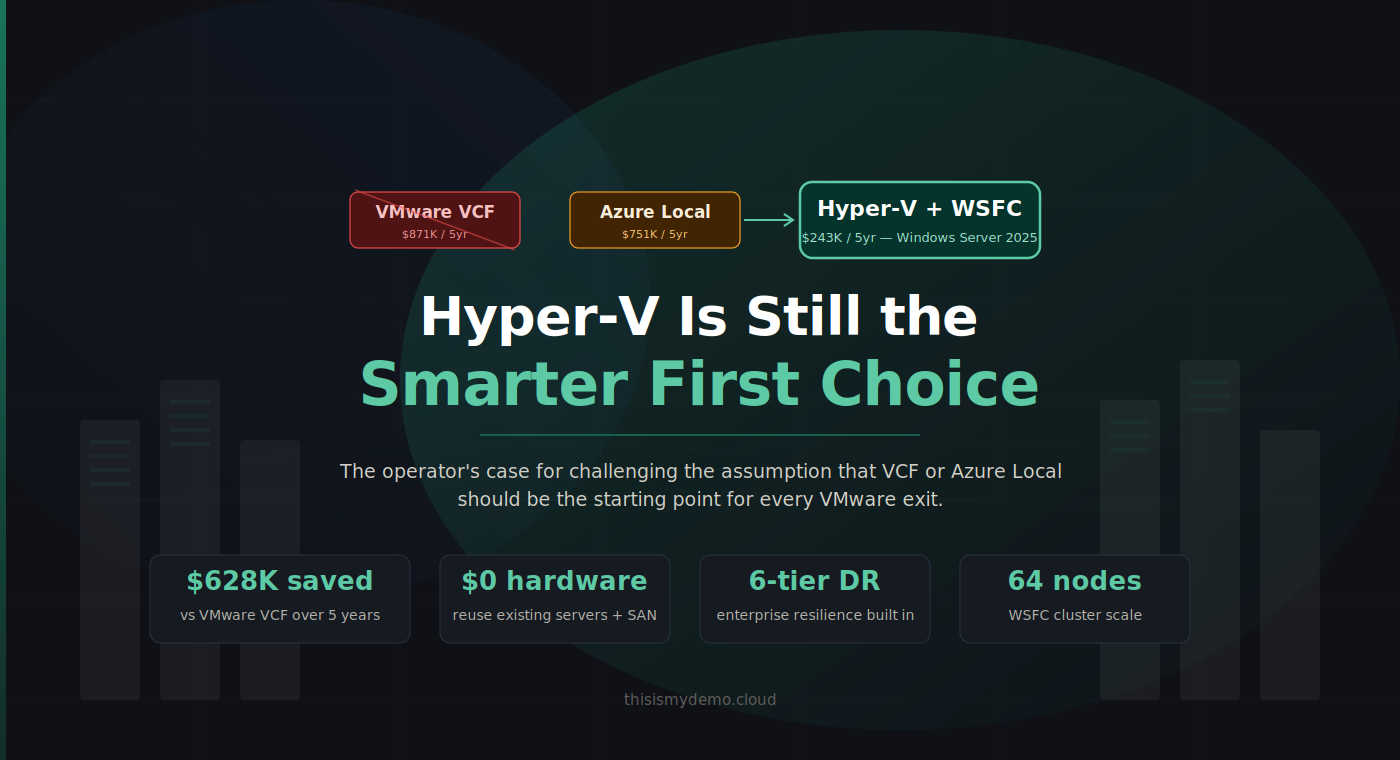
Hyper-V Is Still the Smarter First Choice

Hyper-V Is Still the Smarter First Choice

The operator's case for challenging the assumption that VCF or Azure Local should be the starting point for every VMware exit.

Azure Local is not the default VMware exit path. Neither is VMware Cloud Foundation the unquestioned benchmark it was two years ago. And yet the industry keeps framing the VMware exodus as a binary choice: stay and pay, or move to Microsoft’s preferred Azure-connected platform. Both options serve somebody’s agenda. Neither starts from the question that actually matters to infrastructure operators: what do I need, and what’s the cheapest way to get it without creating new dependencies?
Migrating VMs from VMware to Hyper-V

Migrating VMs from VMware to Hyper-V

VM Conversion Tools and Migration Procedures

You’ve built the case, validated the hardware, configured the hosts, and connected the storage. Now comes the part everyone’s been waiting for (and dreading): actually moving the virtual machines.

VM migration from VMware to Hyper-V is not a single-click operation. Disk formats differ (VMDK vs. VHDX). Virtual hardware differs (VMware paravirtual drivers vs. Hyper-V synthetic drivers). Guest integration tools differ (VMware Tools vs. Hyper-V Integration Services). But the tooling has improved dramatically, and in 2026, you have more options than ever, including a free, Microsoft-supported tool that performs online migration with minimal downtime.

Reusing Your Existing VMware Hosts

Reusing Your Existing VMware Hosts

Hardware Compatibility and Repurposing Strategy

The servers sitting in your datacenter right now, the Dell PowerEdges, the HPE ProLiants, and the Lenovo ThinkSystems, were designed to run hypervisors, not a specific hypervisor. Any hypervisor.

This might seem obvious, but it’s worth stating clearly: enterprise server hardware is hypervisor-agnostic. The same CPUs, memory, storage controllers, and network adapters that run ESXi today will run Hyper-V tomorrow. You’re not abandoning hardware investments when you change virtualization platforms; you’re simply loading different software.

Welcome to the Hyper-V Renaissance

Welcome to the Hyper-V Renaissance

Why It's Time to Reevaluate Microsoft's On-Prem Champion

Introduction

A Perfect Storm Creates Opportunity

If you’ve been watching the virtualization market over the past eighteen months, you’ve witnessed something extraordinary: a once-stable industry thrown into chaos by a single acquisition. When Broadcom completed its $69 billion purchase of VMware in November 2023, few anticipated how dramatically, and rapidly, the landscape would shift. What followed wasn’t just a pricing adjustment; it was a fundamental restructuring that has sent shockwaves through data centers worldwide.

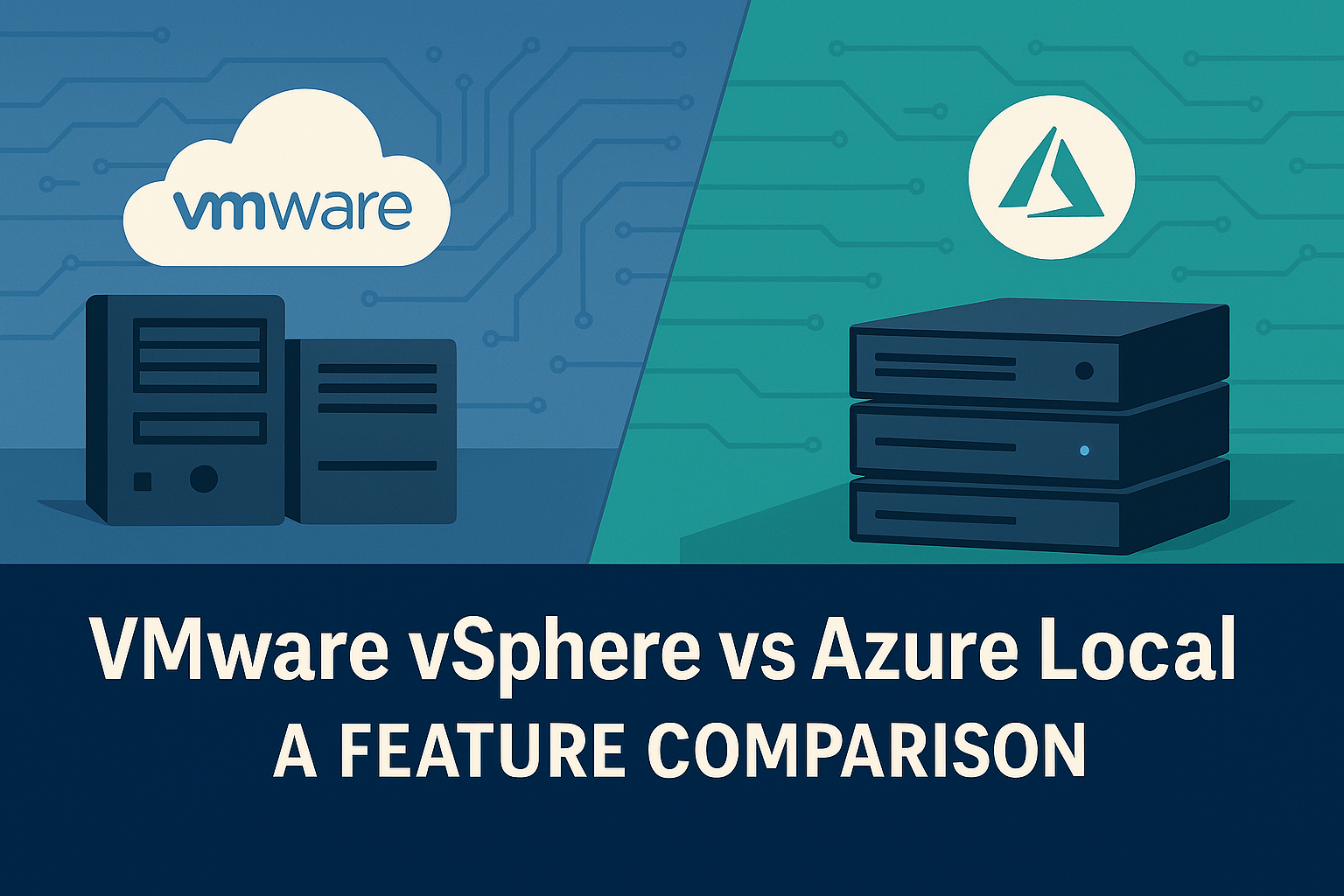
VMware vSphere to Azure Local: Operator Feature Mapping

VMware vSphere to Azure Local: Operator Feature Mapping

This blog is for admins and operators: a practical, side‑by‑side mapping from what you did in vSphere (vMotion, DRS, snapshots, SRM, NSX, vCenter) to what you’ll use in Azure Local (Live Migration, Failover Clustering, checkpoints, ASR/Hyper‑V Replica, WAC/Azure Portal).

From VMware vSphere to Azure Local: What Changes and Where to Click

The industry shift away from VMware has accelerated dramatically. Organizations worldwide are evaluating alternatives, driven by licensing changes, acquisition uncertainty, and evolving business needs. For many enterprises, this transition represents both a significant operational challenge and a strategic opportunity to modernize their virtualization infrastructure.

This blog addresses the practical reality facing infrastructure teams: when organizational decisions mandate a platform change, success depends on understanding exactly how daily operations translate to the new environment. Rather than debating platform merits, this analysis provides the detailed operational mapping that VMware administrators need to maintain service levels during transition.