VMware Cloud Foundation

Reusing Your Existing VMware Hosts

Reusing Your Existing VMware Hosts

Hardware Compatibility and Repurposing Strategy

The servers sitting in your datacenter right now, the Dell PowerEdges, the HPE ProLiants, and the Lenovo ThinkSystems, were designed to run hypervisors, not a specific hypervisor. Any hypervisor.

This might seem obvious, but it’s worth stating clearly: enterprise server hardware is hypervisor-agnostic. The same CPUs, memory, storage controllers, and network adapters that run ESXi today will run Hyper-V tomorrow. You’re not abandoning hardware investments when you change virtualization platforms; you’re simply loading different software.
The Myth of 'Old Tech'

The Myth of 'Old Tech'

Is Hyper-V Dead????

“Hyper-V? That’s legacy tech. It can’t compete with VMware. ‘Hyper-V is dead,’ isn’t it?”

I’ve heard this sentiment more times than I can count. In hallway conversations at conferences, in architecture review meetings, in vendor comparison spreadsheets filled with red X marks in the Hyper-V column. For years, this perception has been the default position, sometimes justified, often not.

In this third post of the Hyper-V Renaissance series, we’re going to dismantle this myth systematically. Not with marketing claims, but with verified specifications, feature-by-feature comparisons, and honest assessments of where Hyper-V excels and where it still trails.

Beyond the Cloud: 2025 Virtualization Licensing Guide - Part II

Beyond the Cloud: 2025 Virtualization Licensing Guide - Part II

Virtualization licensing just got complicated. With VMware's Broadcom acquisition driving 3x cost increases and Microsoft introducing new subscription models, IT leaders need a clear roadmap. This blog provides the analysis and insights you need to make informed decisions that align with your budget and strategy.

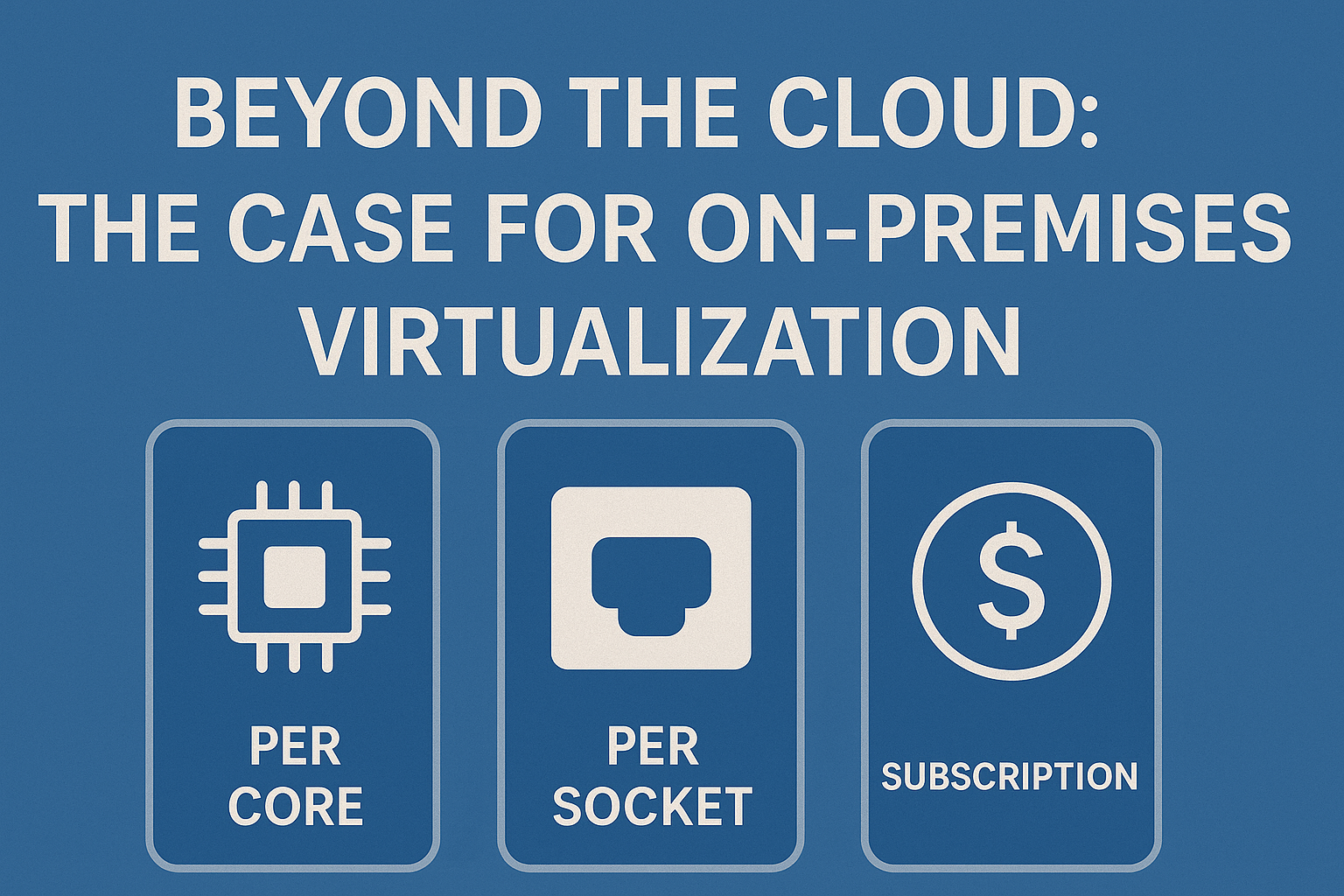
Welcome to Part 2 of our “Beyond the Cloud: The Case for On-Premises Virtualization” series. In our introductory post, we explored why organizations are reconsidering their virtualization strategies post-VMware acquisition. In Part 1, we conducted a detailed five-year Total Cost of Ownership (TCO) analysis comparing Windows Hyper-V, Azure VMware Solution (AVS), and Azure Local, revealing how different cost structures impact long-term budgets.

A key factor driving those cost differences was how each platform’s licensing model works. In this follow-up, we will demystify the various licensing models – per core, per socket, and per subscription – and compare how Windows Server 2025 (which reached General Availability in November 2024), Azure Local (formerly “Azure Stack HCI”), and VMware (both on-premises and via Azure VMware Solution) handle licensing. Our goal is to highlight not just the pricing structures, but also where hidden costs can lurk beyond the base license. The tone remains practical and evaluative: this isn’t about picking winners as much as helping IT directors and solution architects understand the financial and operational implications of each model.